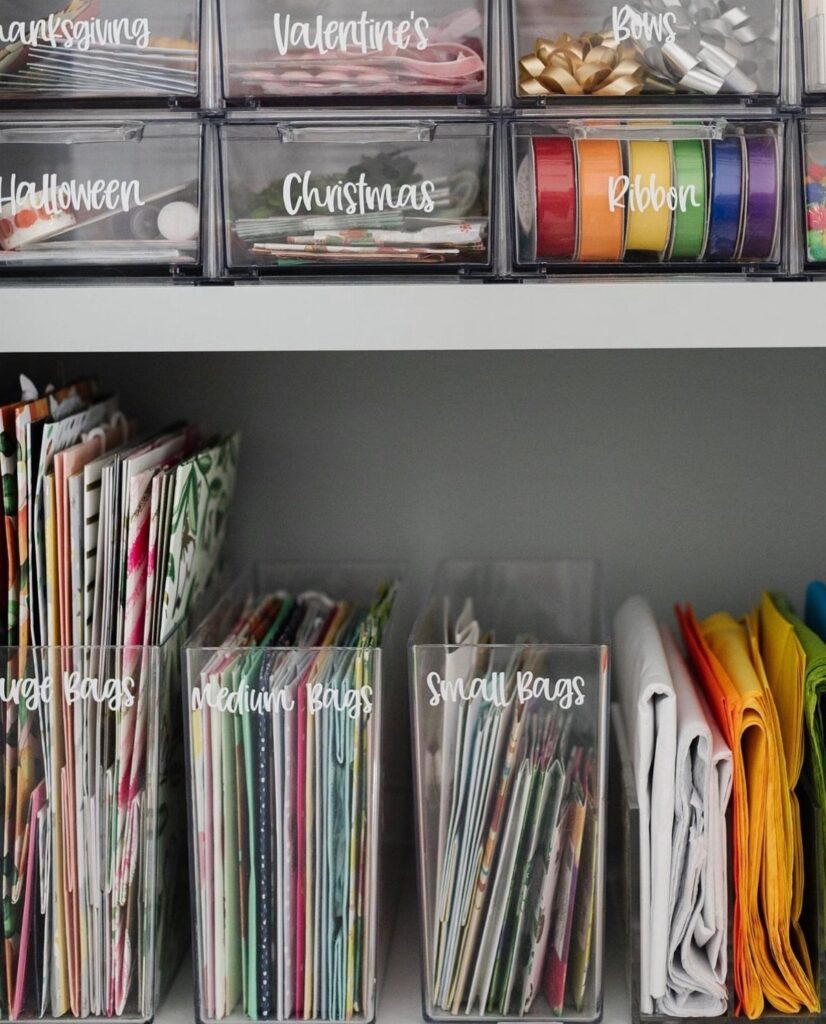
Which of these gift wrap storage ideas fits depends on one fact: whether you have a closet, a stretch of wall or a corner of floor to give up, or only the back of a door.
In a tight space, the over-the-door organizer is the one I’d pick, since it adds nothing to the floor plan and hides everything when the door closes.
1. Portable Gift Wrap Cart
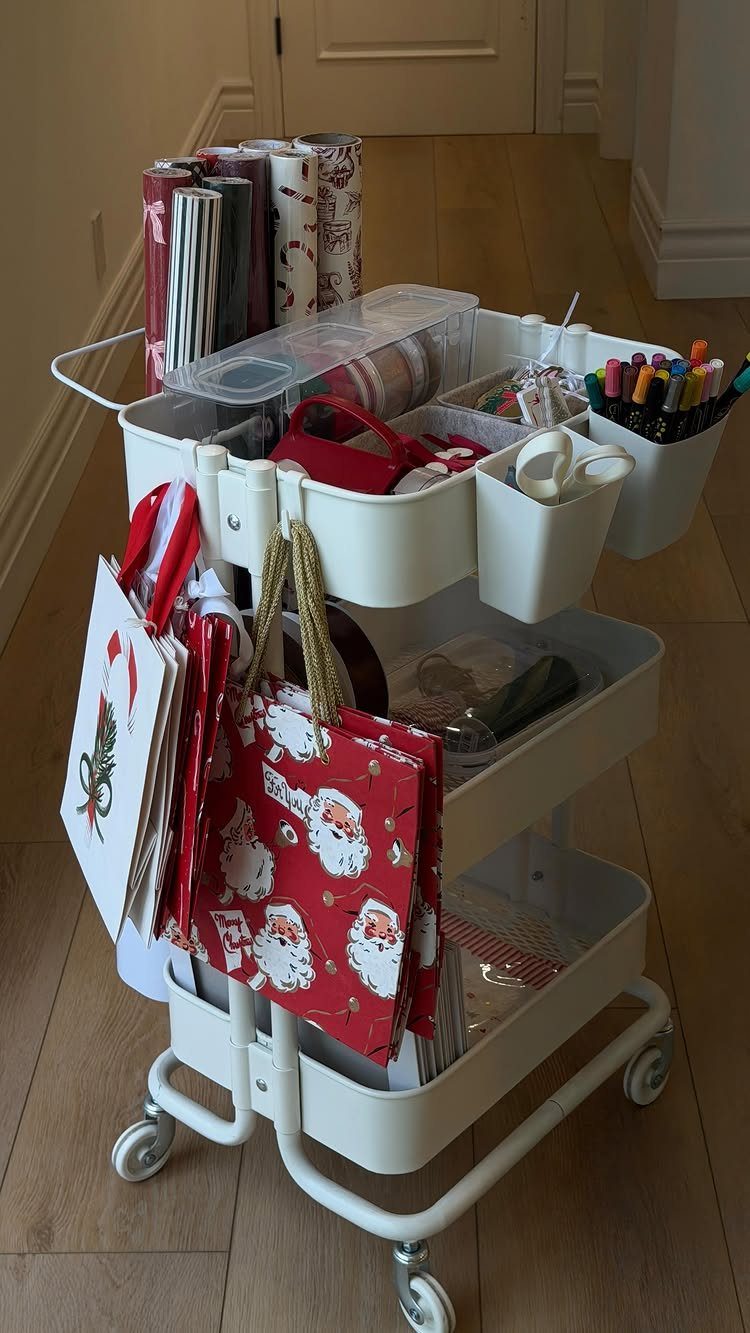
A rolling three-tier cart suits a small home because it goes to the job instead of the job going to it. Wheel it next to the couch or the dining table, wrap, and park it back in a closet afterward.
Nothing here has a stated weight limit or size, so check the tiers against your tallest roll before buying.
2. Laundry Hampers
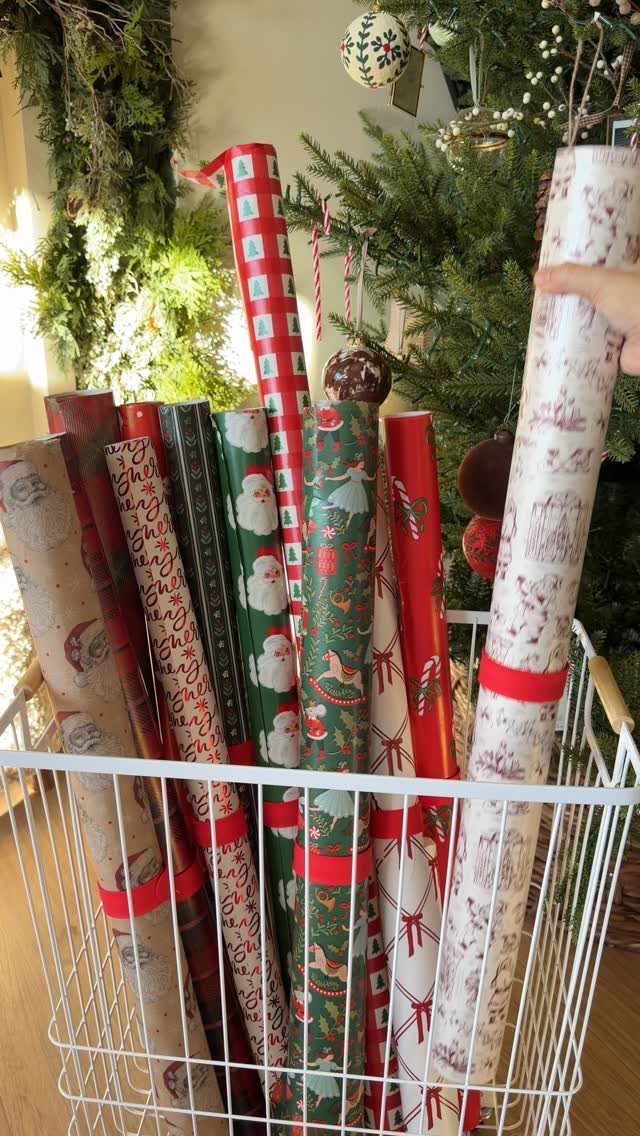
Hampers are already in most homes, which makes this the cheapest idea on the list. A wire hamper holds wrapping paper rolls standing upright, so you can flip through them like records and pull one out without disturbing the rest.
The open wire sides let you see what you own at a glance.
Bring it out for the holidays and keep it in a corner of a bedroom or the garage the rest of the year. One limit: a hamper holds rolls only, so ribbon and tape still need a separate home.
3. Over-the-door Closet Organizer
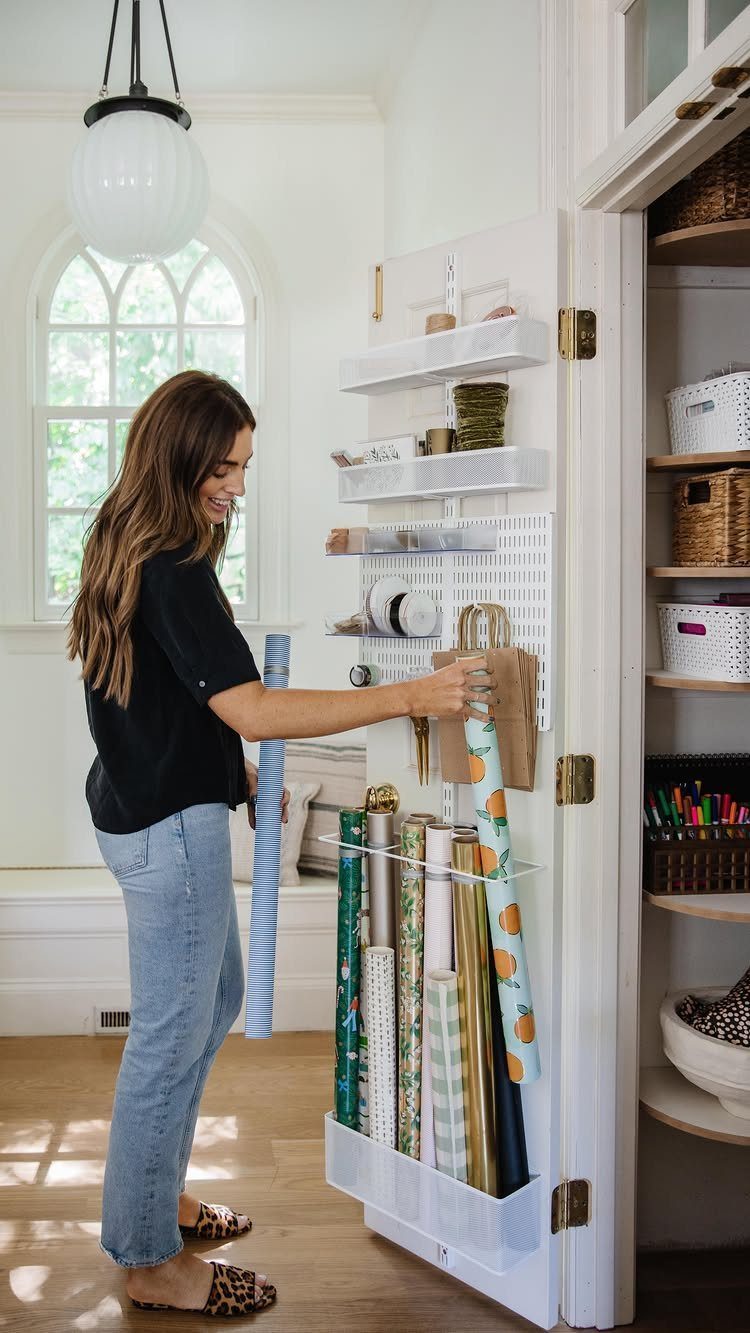
Closet doors are wasted space, and an over-the-door organizer puts them to work holding rolls, ribbon, and tape.
Hanging shelves catch small items like tape and tags, while a pegboard holds rolls of paper and spools of ribbon within arm’s reach.
Of everything here, I like it best for tight budgets and tiny floor plans: nothing new takes up room, and the supplies stay hidden when the door closes.
Measure the gap between the door and the shelves inside before you buy anything, since a door that no longer shuts defeats the purpose.
4. Fabric Gift Wrap Storage Bag
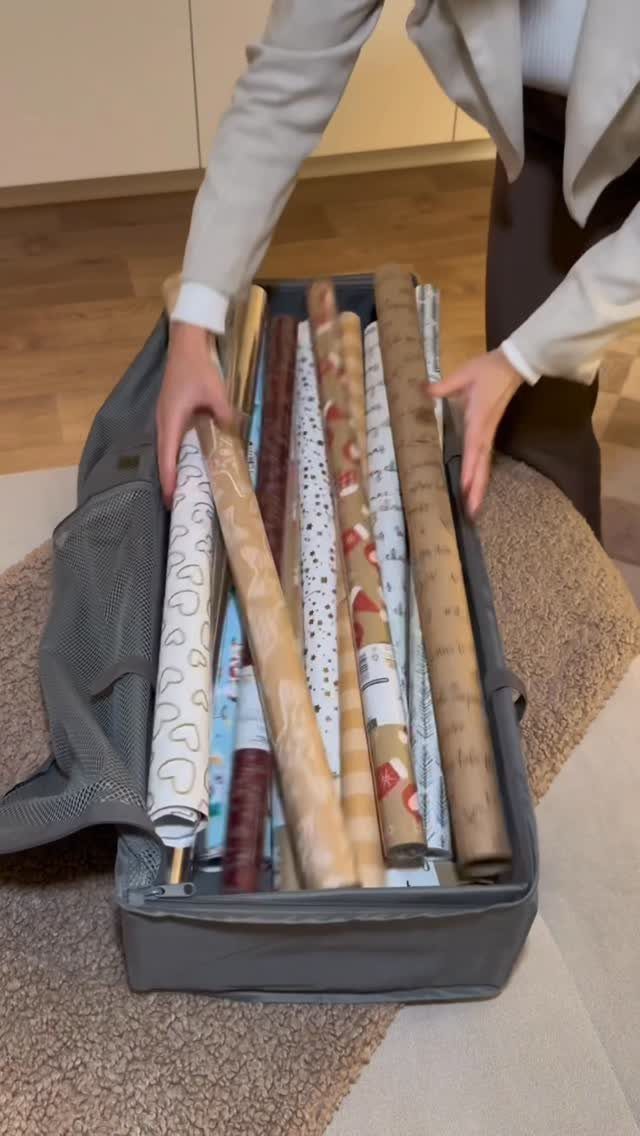
A zippered fabric bag keeps rolls lying flat and covered, which matters if your paper tends to crease or fray at the ends. Slide the rolls in horizontally, zip it, and the whole collection becomes one soft bundle.
Slip it under a bed or behind a closet door.
Fabric gives a little, so it fits awkward gaps better than a rigid tube. A zippered bag hides what is inside, so I would stick a note on the end listing the colors you have.
5. Wall-mounted Storage System
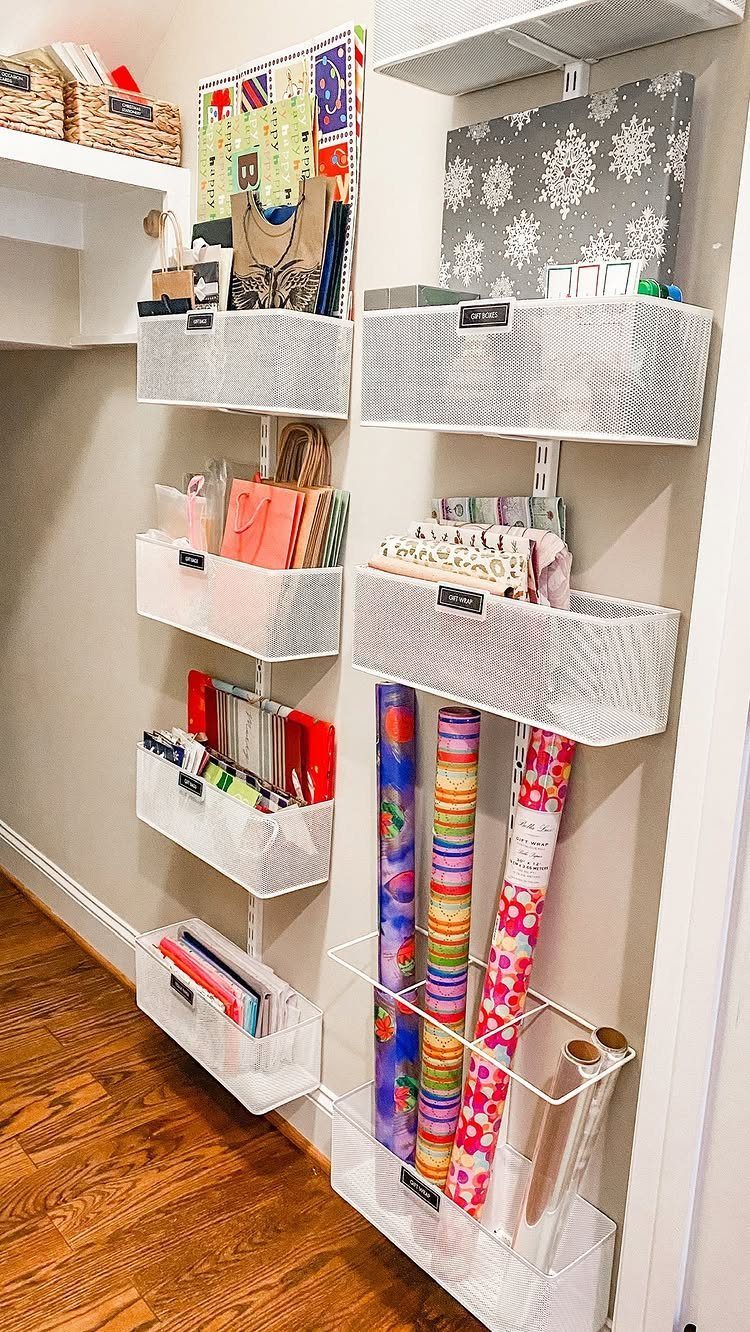
Mounting white wire storage on a wall gets everything off the floor and into view. Mesh baskets take bags, boxes, and loose ribbon, and vertical holders keep paper rolls upright and separate.
This works best in a spare room, laundry room, or garage where you can commit a wall.
Anchor it properly, because rolls and boxes add weight. I like that you can rearrange the baskets as your supplies change, and that open mesh makes it obvious when you are running low.
6. Closet Shelves with Clear Containers
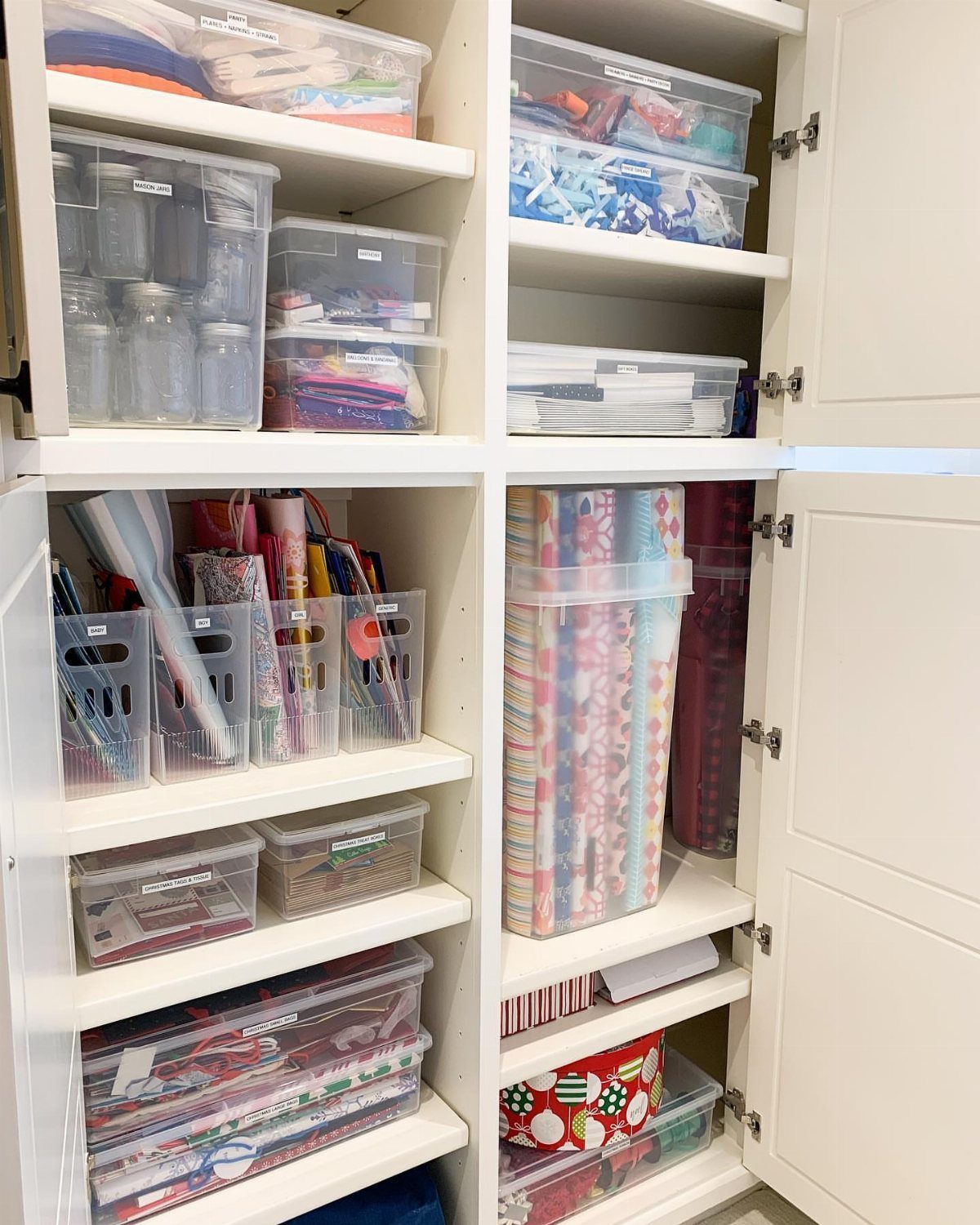
Clear plastic bins turn a closet shelf into a system you can read without opening a single lid. Group ribbon, bows, tags, and tape in separate bins, then add upright holders for the rolls of paper.
I would label every container anyway, even clear ones, because small items blur together. The cost depends on how many containers you need, so start with the category that is the biggest mess and add from there.
7. Vertical Shelving for Folded Paper
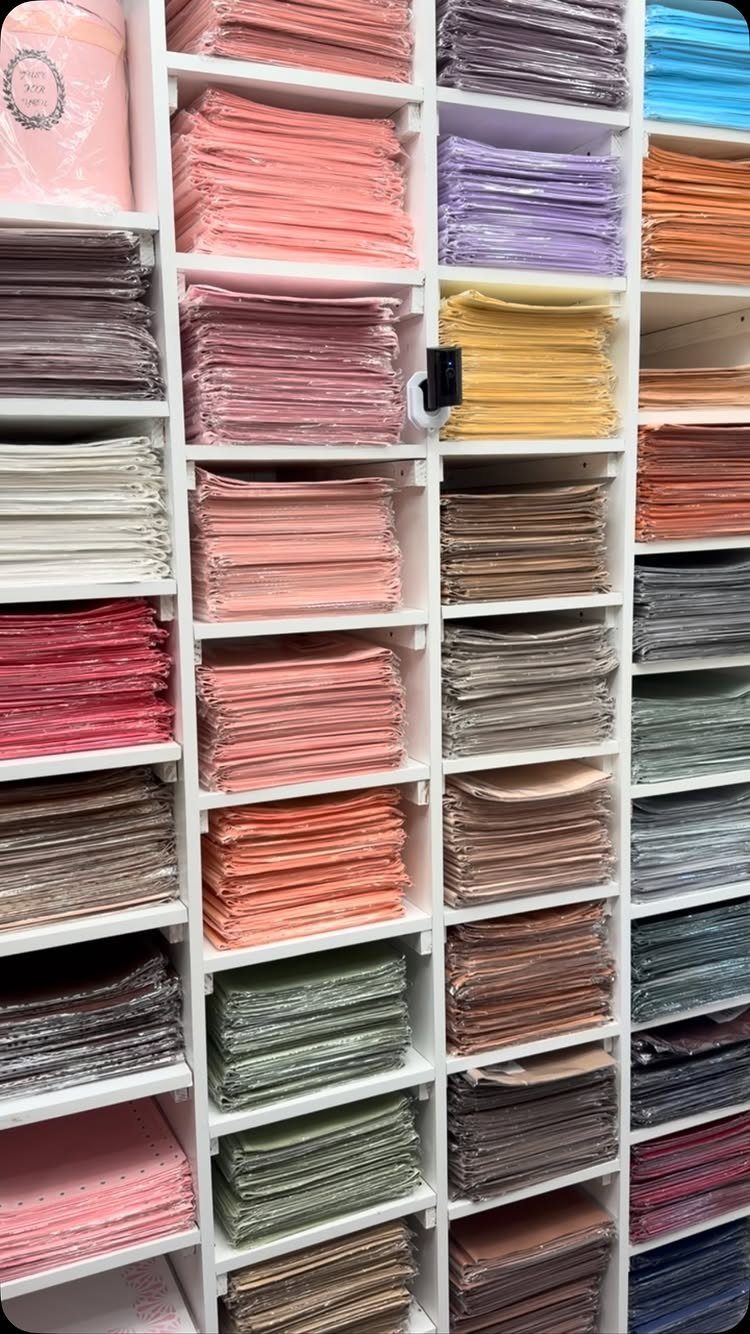
Folded sheets stand in shelf compartments like files in a cabinet, so you can slide out one color without wrinkling the rest.
Sorting folded paper by shade means you can spot the right color at a glance, so a gift gets wrapped in minutes instead of after a long dig through the stack.
Fold each sheet to the width of the compartment so it stands without slumping. Flat sheets store better this way than rolled ones if your paper creases or won’t stay curled.
I would pick this over rolls when you buy paper in sheets or already have a shelving unit with spare slots.
8. Upright Fabric Storage Bin
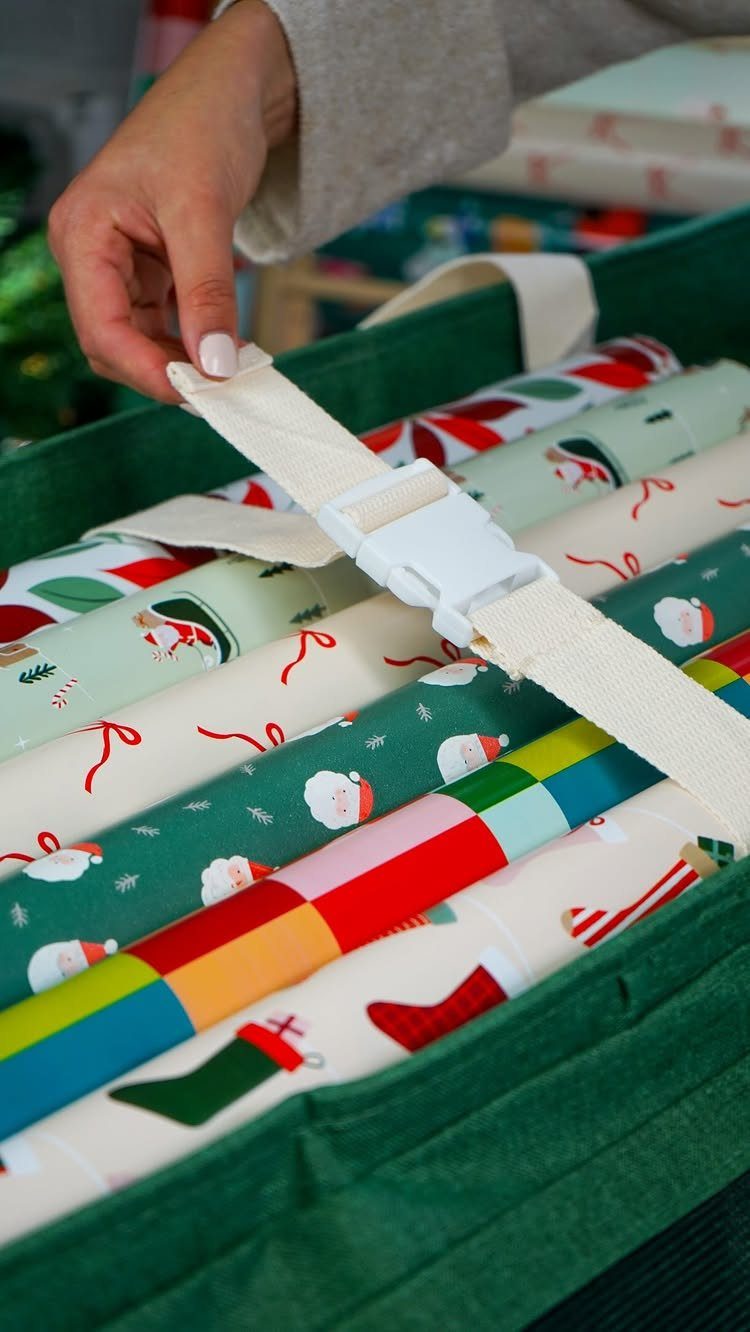
A tall fabric bin with interior straps holds rolls upright, and the straps stop them from tipping or sliding around when you move the bin. Loosen a strap, lift out the roll you want, and cinch it again.
Holiday paper suits this best, since you can pack the whole season into one bin and put it away in January. I like that it stands in a closet corner without extra hardware.
Fabric can sag if the bin is half empty, so fill it with rolls or tighten the straps to keep them standing.
9. Ribbon and Paper Dispensing Rack
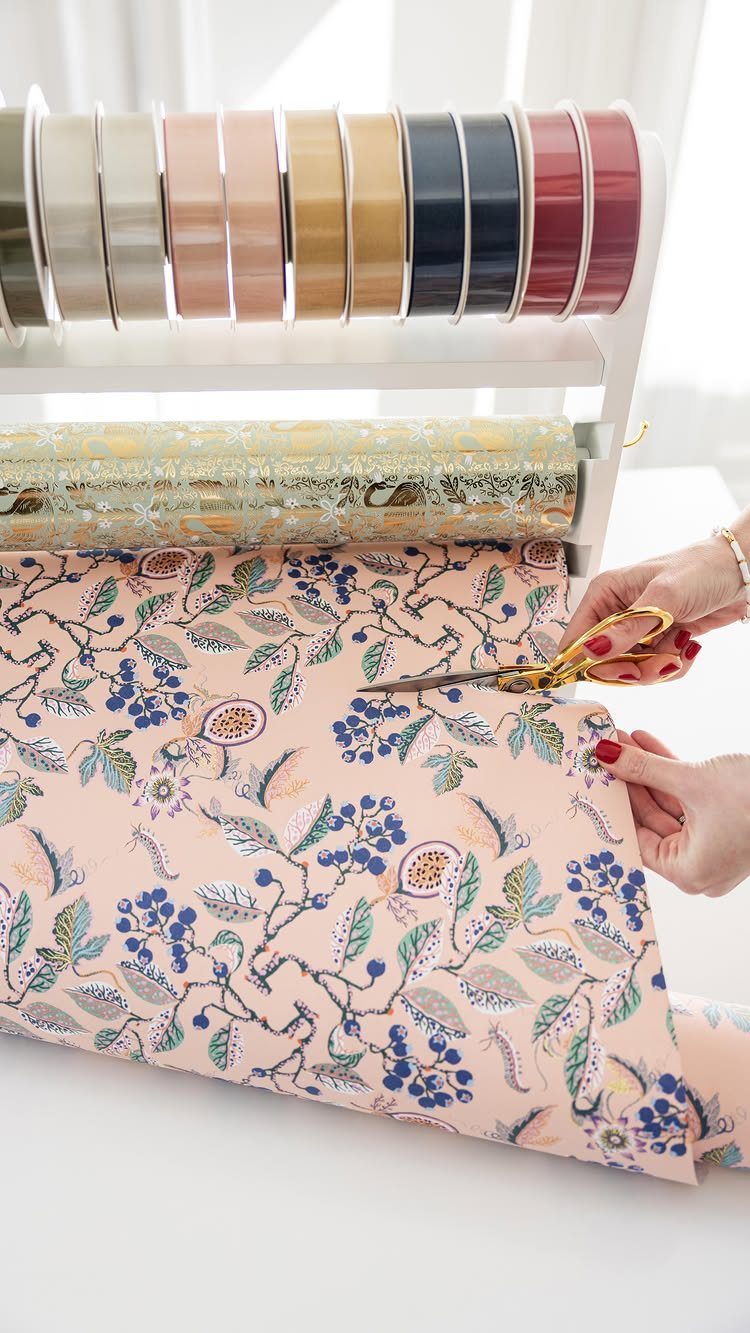
A dispensing rack lets you pull paper and ribbon straight off the roll and cut, with no unrolling on the floor. Scissors stay right there, so wrapping takes fewer trips back and forth.
Set it on a tabletop or a shelf near your wrapping spot.
Racks like this hold fewer rolls than a closet system, so keep your most-used paper and ribbon on it and store the extras elsewhere.
Benefits of Organization
Duplicate purchases are the quiet cost of a messy wrap stash. When you can see what you own, you stop buying a third roll of the same red paper and a fourth pack of clear tape.
Tags go missing faster than anything else in a wrap stash, but because they lie flat, they take almost no space to keep.
Sort them into labeled envelopes by occasion, or use small cosmetic pouches or Ziplock bags. A shallow drawer with dividers does the job, and so do photo boxes with index tabs or an expanding file folder sorted by occasion.
Tags go in with the matching paper, so a single occasion has everything in one spot. Wrapping then starts with one grab instead of a hunt through three rooms.
Assessing Storage Needs
Decide what you actually need before you buy any storage. Declutter first, then make a list of what is missing.
Look for holes in what you own, like having no birthday paper that suits an adult. Pull out the all-purpose items that serve more than one occasion, and set aside anything damaged that needs replacing.
That list doubles as a shopping guide for the Black Friday sales, so you buy only what fills a real gap.
Then match the storage to the space you have and the way you wrap.
If you wrap often, keep supplies in sight. If you wrap a few times a year, hidden storage is fine.
Maintaining Organization
A wrap station stays tidy only if you check it now and then. Pick a regular moment, such as before the holiday season starts and again once it ends, and put everything back where it belongs.
Tags drift fastest. Return loose ones to their labeled envelopes or pouches, and keep each set with the paper for that occasion.
While you are there, toss damaged items and jot down what is running low, so the next shopping list is already half done. A short reset of your wrap station beats a full overhaul in December.
Frequently Asked Questions
How do you keep wrapping paper from unraveling?
Hold each roll closed with a loop of elastic, a sock cuff, or a Velcro strip. Velcro is reusable and adjustable, and elastic is sold by the yard at fabric stores.
Rubber bands hold a roll closed, but left on for months they dent the paper and can leave sticky marks. Paper clips and hair ties also do the job.
How do you organize old gift bags?
Fold them flat and stack them, or hang them on hooks. A wall-mounted setup with mesh baskets also takes bags easily, and open mesh shows at a glance when you are running low.
A zippered fabric storage bag works as well, since you can slide it under a bed or behind a closet door.
What is the best way to store wrapping paper in a small home?
For a small budget and a tiny floor plan, I’d choose an over-the-door closet organizer.
Rolls, ribbon, and tape all fit on it, and closing the door hides the lot. Before buying, measure the space between the door and the shelves inside so the door still closes.
Can you store gift wrap in a laundry hamper?
Yes, and it is the cheapest option since most homes already own one. Only rolls go in a hamper, so give ribbon and tape their own spot.