
Which gift wrapping business suits you depends on how much working time you can give it. With only a few hours a week, one upgrade tier and one or two marketing channels will serve better than spreading thin.
1. Basic Supplies
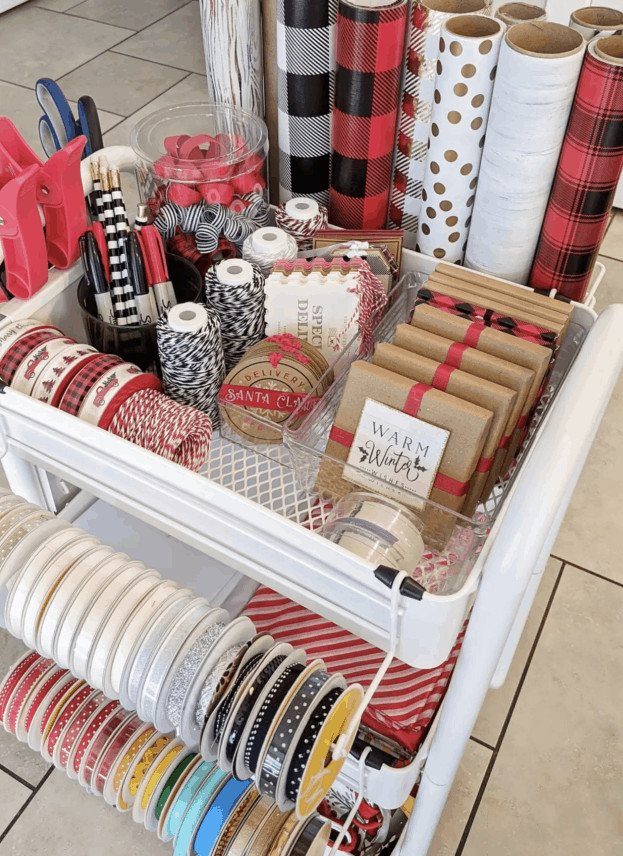
A rolling cart is the cheapest piece of workflow you can buy for this business. Paper rolls stand upright, ribbon and twine hang within reach, and scissors stay in one spot instead of getting lost under a pile of tissue.
With limited space, a narrow cart that slides into a closet beats a dedicated table.
Start with paper, ribbon, twine, tags, tape and scissors, and add a ruler when orders pick up. Skip specialty tools until a customer asks for them.
2. Sustainable Wrapping Materials
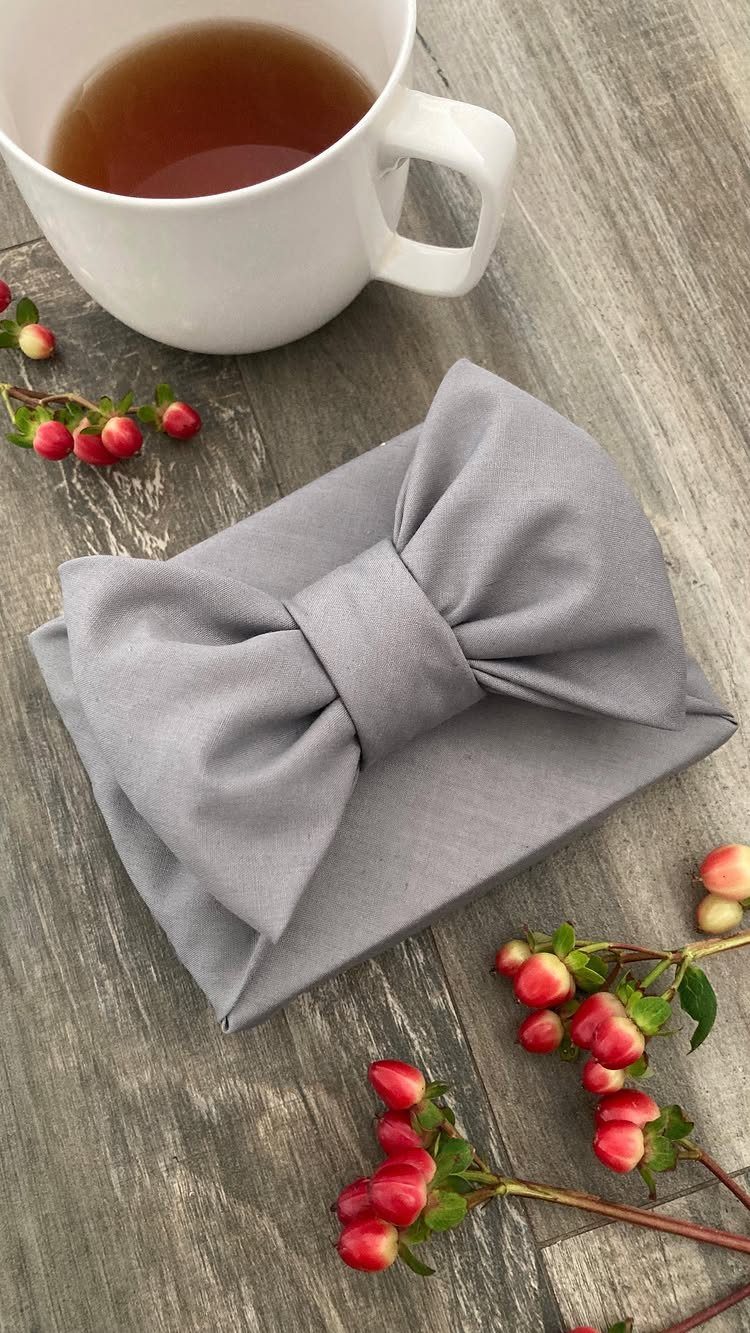
Fabric wrapping has a built-in pitch: the wrap is part of the gift, and the customer can reuse it.
That is why sustainable materials are in demand, and why a grey cloth wrap with a simple bow reads as calm and considered.
I would offer it as an upgrade tier, priced above standard paper. Choose one neutral fabric first, since a single color works with almost any gift and keeps your starting stock small.
3. Corporate Gift Wrapping

Businesses need gifts wrapped for employees and clients, often in batches, which makes this the steadiest work on the list. One order can equal a dozen individual customers.
Matching is what sells it: the same box, the same ribbon and a branded tag on every package.
Settle on one repeatable design so each gift takes minutes, not an hour. Quote per gift and lock in the price first, ahead of any material purchase, so a big order never costs you money.
4. High-quality Wrapping Supplies
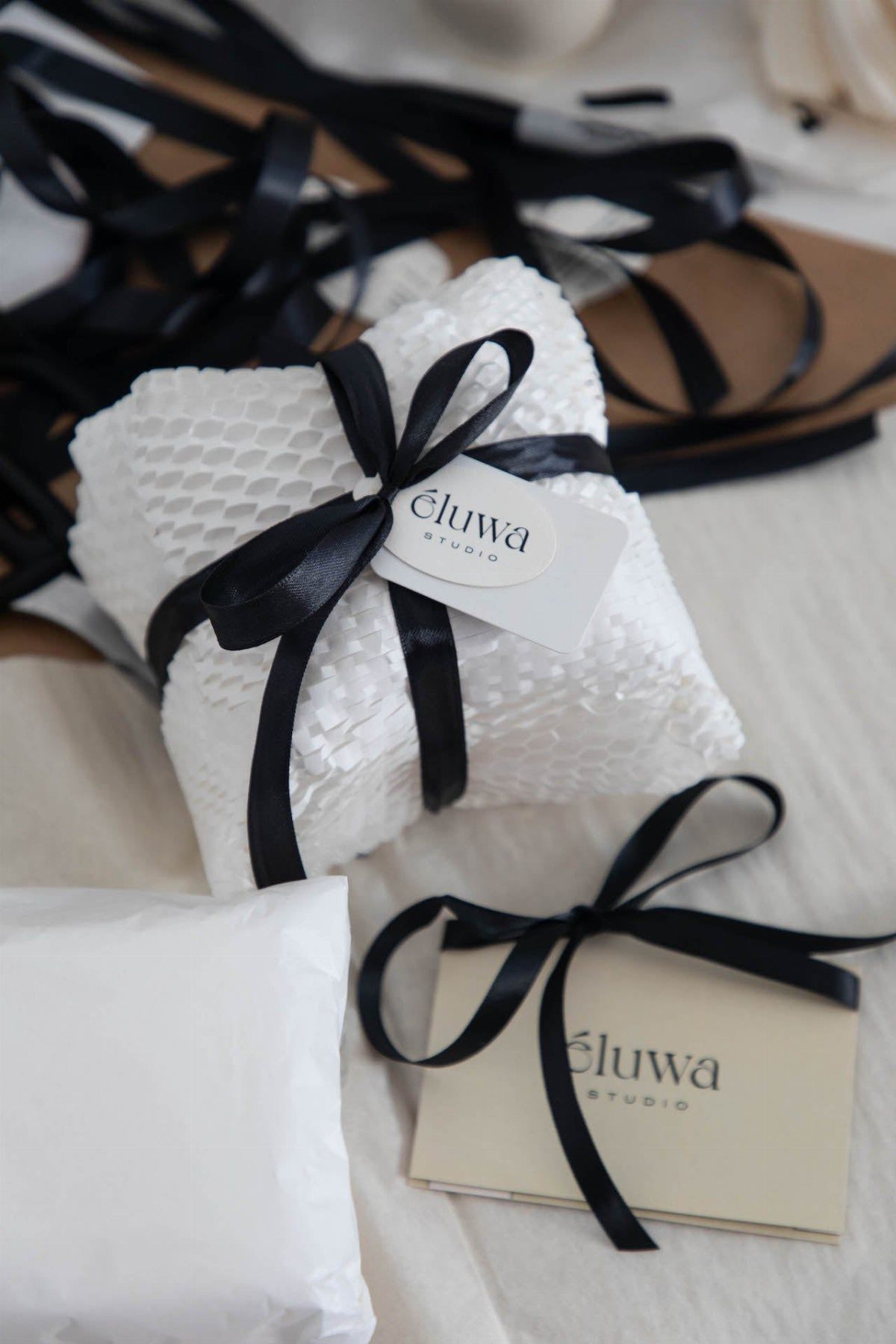
Good supplies are what let you charge professional rates, because customers pay for how the package looks.
Buy fewer, better items.
One heavyweight paper and one quality ribbon in a matching tone beat a dozen cheap rolls, and they make your work recognizable. A branded tag finishes it, though it costs extra, so build that into your price.
Skills Needed for Gift Wrapping
Perfectionism is the skill that pays here. A crooked fold or a visible strip of tape shows, and customers notice it right away.
Steady hands and a knack for making things neat count for as much as any creative eye, because a crooked fold shows on every box.
Practice on spare boxes in odd shapes until your corners come out crisp without thinking about them.
Customer service is the other half. Clear communication means asking about the occasion, the recipient and the budget before you cut any paper.
Pressure is the skill people underestimate.
Some clients will stand and watch while you wrap something beautiful and possibly valuable, and not everyone can stay steady with an audience. If that sounds stressful, rehearse with a friend watching until it stops bothering you.
“Dull is the enemy of commerce,” says veteran retailer Martha Jenkins, owner of Kitchenworks in Chapel Hill, NC. That’s why she and other successful shop owners rely on retail gift packaging supplies as an inexpensive way to create visual interest.
— Staples
Marketing Strategies
Social media is where I would start, because wrapping is a visual product. Post short clips of a package coming together and photos of finished gifts, and let the work do the selling.
Local events come next. A holiday market or craft fair lets people see your wrapping in person, and a small sample table with a price card turns browsers into orders.
Partnerships with other businesses are the third lever. Boutiques, florists and gift shops often have customers who want wrapping but no time to do it, so offer a simple referral arrangement.
Bring a few finished samples when you pitch, since a shop owner will say yes faster to something they can hold.
Challenges in the Business
Competition may be low, and that is a mixed blessing: few rivals also means many people have never thought to hire a wrapper.
Marketing is therefore the real challenge. Customers will not find you unless you show up where they already look, so spend your early time on visibility rather than on buying more supplies.
Start with one or two channels and post on them on a steady schedule before adding any others. Steady and small beats a burst of activity that fades after a month.
Frequently Asked Questions
Is gift wrapping a good business?
Yes, it can work as a side hustle or a full-time business. Few towns have a dedicated gift wrapper, so competition stays thin, and plenty of shoppers simply never think to pay someone to do it.
A single company order can be worth as much as a dozen one-off customers, which makes corporate work the most dependable income.
Finding customers is the hard part: nobody books a wrapper they cannot see, so post where local shoppers already scroll and search.
How much do you charge to wrap gifts?
Pricing varies, but the sources I’ve seen put it at roughly £3–£7 per item or £10–£30 per hour, in British pounds. Add the cost of extras like branded tags into your price, and charge more for upgrades such as reusable fabric wrap.
How do I become a professional gift wrapper?
Build your skills first, since crisp corners and hidden tape are what customers notice. Then show your work with photos and short clips, and bring finished samples when you pitch local shops.